
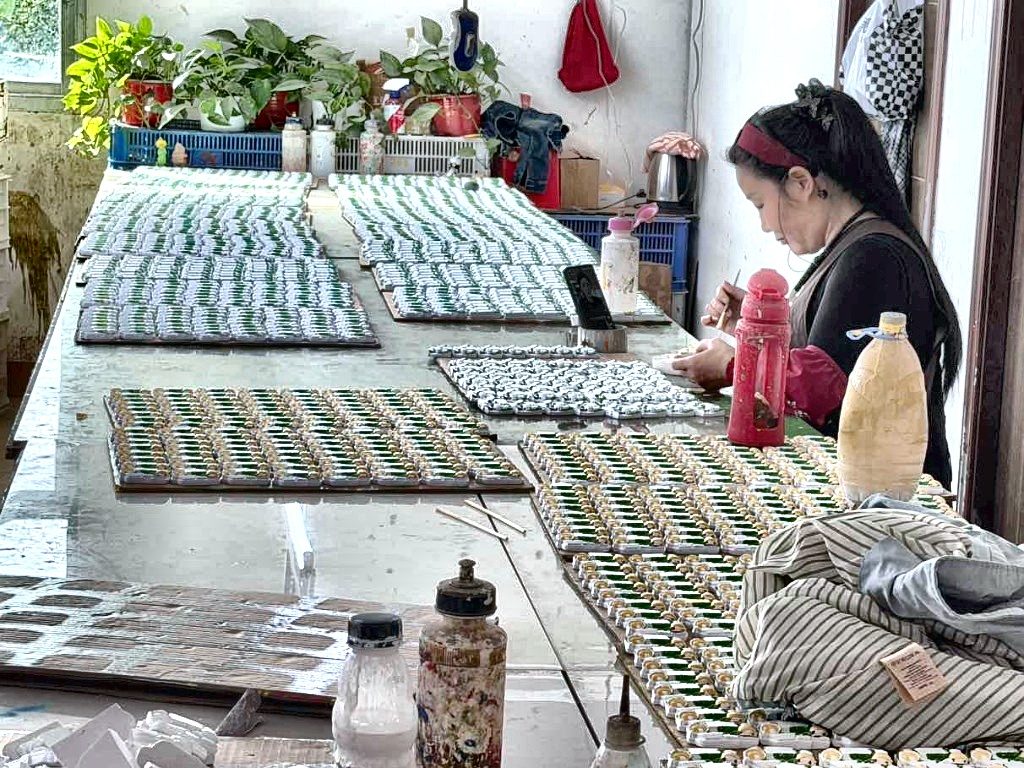
In the spring of 2024, the lead buyer for a prominent European garden center chain, operating over eighty retail locations across France, Germany, and the Netherlands, approached our international sales desk with a serious supply crisis. The previous autumn, their procurement team had imported forty-two shipping containers of outdoor polyresin garden decor—including solar-powered meditating Buddhas, classic garden gnomes, and tiered bird baths—from an unverified low-cost vendor. By mid-summer, less than five months after retail store placement, customer warranty returns were swamping their customer service department. In consumer gardens from Munich to Marseille, statues displayed on open patios had developed severe white surface chalking, pastel pinks and yellows had bleached into lifeless ghostly tones, and the first autumn freeze caused huge sheets of paint to blister and delaminate off the resin substrates. The buyer faced over €180,000 in unsellable stock and catastrophic brand erosion.
Having spent twenty-six years developing specialized polymer formulations and industrial coating lines at ArtisResin Craft Co., Ltd., I am intimately familiar with the physics of outdoor polymer degradation. Outdoor garden statuary occupies an entirely different performance category than indoor collectibles. A decorative tabletop bust sits in climate-controlled 22°C ambient air under gentle incandescent lighting. An outdoor garden statue placed beside a suburban flower bed is subjected to brutal environmental assault: high-energy solar ultraviolet photons (UV-A and UV-B), continuous thermal swings spanning from -20°C winter freezes to +48°C summer direct solar radiation, sudden rain quenching, acid atmospheric deposition, and freezing hydraulic ice expansion. In this technical whitepaper, I will detail the photochemical degradation mechanics of cheap resin coatings, the formulation of our proprietary Three-Tier Outdoor Protection System, and the laboratory testing protocols we mandate under ASTM G154 to guarantee multi-year outdoor colorfastness.
1. The Photochemical Degradation Mechanism: C-C Bond Scission & Chalking
To engineer effective weatherproofing, one must understand how solar radiation destroys organic polymers at the molecular level. Sunlight reaching the Earth's surface contains ultraviolet radiation divided into UV-A (315 to 400 nm) and UV-B (280 to 315 nm). In quantum mechanics, the photon energy E carried by electromagnetic radiation is inversely proportional to wavelength:
E = (h · c) / λ
where h is Planck's constant (6.626 × 10⁻³⁴ J·s), c is speed of light (3.0 × 10⁸ m/s), and λ is wavelength.
- UV-B Photon at 300 nm: Photon Energy = 399 kJ/mol (4.13 eV)
- Carbon-Carbon Single Bond (C-C) Dissociation Energy: 348 kJ/mol
- Carbon-Hydrogen Bond (C-H) Dissociation Energy: 413 kJ/mol
Notice the critical physical threshold: a single UV-B photon at 300 nm carries 399 kJ/mol of energy—significantly more energy than the 348 kJ/mol required to sever a standard carbon-carbon single bond in standard polyester resin or low-grade acrylic paint. When budget statues are exposed to midday sunlight, UV photons strike polymer chains, breaking covalent bonds and generating highly reactive free radicals (R•). These free radicals react instantly with atmospheric oxygen to form peroxy radicals (ROO•), initiating an autocatalytic photo-oxidation chain reaction that cleaves the polymer backbone into brittle, low-molecular-weight oligomers.
Visually, this molecular destruction manifests as chalking (ASTM D4214): the organic polymer binder that holds the paint together literally disintegrates into microscopic dust. Rain washes away the degraded resin, leaving loose, unbonded mineral fillers (calcium carbonate) and bleached pigment granules sitting on the surface like powdery white chalk. Simultaneously, cheap organic azo dyes and diarylide yellow pigments undergo photochemical rearrangement, causing total color fading (loss of chromaticity). Finally, during winter, liquid water penetrates microscopic micro-cracks in the chalked surface. When the water freezes into ice, it expands volumetrically by 9.05%, generating internal hydraulic shear stresses exceeding 15 MPa—far higher than the degraded paint film's tensile strength—causing explosive paint delamination and spalling.
2. ArtisResin's Three-Tier Outdoor Defense Architecture
To eliminate these multi-factor failure modes, ArtisResin engineering developed an integrated Three-Tier Protective Coating System that addresses adhesion, pigmentation, and UV shielding in three distinct chemical layers:
Tier 1: Penetrating Silane-Epoxy Adhesion Anchor (ASTM D3359 5B)
Ordinary paint fails because it sits passively on top of the cured resin surface, held only by weak secondary van der Waals forces. Any moisture migrating through the substrate breaks this weak mechanical bond. At ArtisResin, freshly demolded castings undergo ultrasonic degreasing followed by application of our Formula AP-10 silane-epoxy primer. The primer contains gamma-glycidoxypropyltrimethoxysilane coupling molecules. The methoxy groups hydrolyze into reactive silanols that form covalent siloxane bonds (Si-O-Si and Si-O-Ca) with the inorganic calcium carbonate and stone particles in the resin, while the epoxy rings cross-link into the organic polyester network. This creates an impenetrable molecular anchor that passes ASTM D3359 cross-hatch tape adhesion with a flawless 5B rating (zero square delamination) even after 100 hours of continuous hot water immersion.
Tier 2: Grade-8 Lightfast Inorganic Acrylic Enamels (250% Elasticity)
For all coloration and artisan hand-painting, we have banned all organic dyes, fluorescent pigments, and basic lake colors. Our paint kitchen uses exclusively synthetic inorganic pigments certified Grade 8 on the International Blue Wool Scale (where Grade 8 represents absolute lightfastness with zero perceptible fading under 500 hours of direct carbon-arc exposure):
- Earth & Terracotta Contours: Micronized synthetic iron oxides (Fe2O3 and FeOOH) calcined at 800°C.
- Cerulean Blues & Aquas: Cobalt aluminate spinel (CoAl2O4), completely impervious to acid rain and UV breakdown.
- Foliage Greens: Chromium oxide green (Cr2O3), the most thermally and chemically stable green pigment known to chemistry.
- Brilliant Whites: Rutile-phase titanium dioxide (TiO2) coated with dual layers of alumina (Al2O3) and silica (SiO2) to passivate photochemical radical generation.
Crucially, these pigments are dispersed in an elastomeric polyurethane-acrylic hybrid emulsion engineered with 250% elongation at break. Through extreme seasonal temperature cycles from -20°C winter freezes to +45°C summer sun, the flexible paint film expands and contracts elastically alongside the stone polyresin core, preventing micro-cracking and hairline moisture fissures.
Tier 3: Dual-Component (2K) Aliphatic Polyurethane Armor with HALS & UVAs
The ultimate protective barrier is our proprietary 2K clearcoat (Formula UC-90). Formulated from hexamethylene diisocyanate (HDI) aliphatic polyisocyanates and hydroxyl-functional acrylic polyols, this coating cures into a glass-hard, cross-linked polyurethane shield with exceptional chemical and scratch resistance. Critically, we introduce two active molecular stabilizers:
- Benzotriazole UV Absorbers (UVAs, 2.5% wt): These molecules act as microscopic optical filters. They absorb incoming UV photons in the 290–380 nm range and instantaneously convert the harmful photon energy into low-grade vibrational heat via intramolecular proton transfer, re-emitting the energy harmlessly before it can touch the underlying acrylic pigments or resin substrate.
- Hindered Amine Light Stabilizers (HALS, 1.8% wt): HALS molecules function as regenerative radical scavengers. Operating through the Denisov catalytic cycle, HALS intercepts any free radicals that slip past the UV absorbers, converting them into stable nitroxide ethers, and continuously regenerating themselves to provide active chemical protection that lasts for over five years of continuous outdoor exposure.
3. ASTM G154 Accelerated Weathering Chamber Protocol & ΔE Formula
To mathematically certify our weatherproofing before shipping export containers, production lot samples are placed inside our laboratory's automated Q-Lab accelerated UV weathering chamber operating under ASTM G154 Cycle 1:
- Continuous UV Exposure: 8.0 hours under fluorescent UV-B 313nm lamps at an irradiance of 0.89 W/m²·nm at a black panel temperature of 60°C ± 2.5°C.
- Dark Condensation Cycle: 4.0 hours of 100% relative humidity condensation at a temperature of 50°C ± 2.5°C, simulating heavy nighttime dew and rain.
- Test Duration: Continuous operation for 500 hours (equivalent to roughly three to four years of intense subtropical sun in Florida or southern Spain).
Color change is measured at 100-hour intervals using an X-Rite spectrophotometer under standard D65 illuminant with a 10° observer angle. The total color deviation (ΔE) is calculated using the official CIE L*a*b* Euclidean distance formula:
ΔE*ab = √[(ΔL*)² + (Δa*)² + (Δb*)²]
where:
- ΔL* = Difference in Lightness (positive = lighter/chalky, negative = darker)
- Δa* = Difference along Red/Green axis (positive = redder, negative = greener)
- Δb* = Difference along Yellow/Blue axis (positive = yellower, negative = bluer)
In international commercial contracts, a ΔE < 1.5 is virtually undetectable to the human eye, ΔE between 1.5 and 3.0 represents minor acceptable drift, while ΔE > 5.0 represents severe, unacceptable discoloration. Below is the certified laboratory testing log comparing our Three-Tier Outdoor Protection System against industry standard single-tier finishes after 500 hours of ASTM G154 testing:
| Performance Parameter | Standard Single-Tier Acrylic Finish | ArtisResin 3-Tier UV Protection System | Quality Pass Threshold |
|---|---|---|---|
| Total Color Shift (ΔE CIE L*a*b*) | ΔE = 6.84 ± 0.45 (Severe Fading) | ΔE = 1.18 ± 0.12 (Imperceptible) | ΔE < 1.50 Max |
| 60° Surface Gloss Retention (%) | 42.5% (Dull, Chalky Surface) | 94.2% (Pristine Satin Luster) | ≥ 85.0% Retention |
| Surface Chalking Rating (ASTM D4214) | Rating 4 (Heavy White Powdering) | Rating 10 (Zero Chalk Detected) | Rating 10 Only |
| Cross-Hatch Adhesion (ASTM D3359) | 1B (>35% Delaminated Area) | 5B (100% Clean Square Edges) | 5B Rating Only |
| Blistering Resistance (ASTM D714) | Dense Size #4 Blisters | Zero Blistering (Completely Smooth) | Zero Blistering |
| Freeze-Thaw Cycling (-20°C to +40°C, 30 Cycles) | Edge Spalling on 22% of Units | 100% Zero Cracking or Spalling | 100% Intact Core |
| Hydrophobic Water Contact Angle | 54° (Porous Water Absorption) | 98° (Beads and Sheds Rainwater) | ≥ 90° Water-Beading |
4. Winter Freeze-Thaw Resistance: Core Waterproofing Protocols
While surface clearcoats stop direct rainfall, garden statues often sit on wet mulch, lawn grass, or puddle-prone stone patios. If the raw bottom pedestal of a statue is unsealed, it acts like a sponge wick, drawing ground moisture up into the porous mineral core via capillary action. When that trapped water freezes in sub-zero winter temperatures, the resulting internal ice crystallization tears the statue apart from the inside out.
ArtisResin mandates a dual-ended waterproofing protocol for every outdoor garden product:
- Centrifugal Hydrophobic Base Dipping: After demolding and base flat-grinding, the bottom 30mm of every garden statue is dipped into an organosilicon hydrophobic sealer for sixty seconds. The nano-scale siloxane molecules penetrate 5mm to 8mm into the stone-resin pore structure, altering the internal pore surface energy from hydrophilic to strongly hydrophobic (water contact angle > 110°). Even if the statue sits submerged in 20mm of standing puddle water for weeks, water absorption is limited to less than 0.08% by weight.
- Drainage Weephole & Sand-Ballast Ports: For large hollow-cast garden statues exceeding 400mm height, we incorporate an engineered bottom drainage port fitted with a threaded, silicone-gasketed EPDM plug. This allows consumers or landscapers to add dry silica sand ballast for 90 km/h wind stability while preventing standing internal condensation from accumulating and freezing.
6. Marine Coastal Salt Fog Endurance (ASTM B117 96-Hour Testing)
Outdoor polyresin garden statues and patio decorative accents deployed in coastal regions—such as seaside resorts in Florida, California coastal villas, or Mediterranean beachfront restaurants—must withstand corrosive marine airborne salt spray in addition to solar ultraviolet radiation. Airborne sodium chloride (NaCl) and magnesium chloride aerosols settle on porous paint surfaces, attracting ambient moisture and forming conductive electrolytic micro-cells that accelerate polymer bond breakdown.
To verify coastal environmental endurance, production specimens of ArtisResin's outdoor garden statues are subjected to continuous accelerated salt fog testing in our laboratory's cyclic corrosion chamber conforming strictly to ASTM B117 (Standard Practice for Operating Salt Spray Apparatus). The test chamber continuously atomizes a 5.0% ± 0.5% sodium chloride solution at an operating chamber temperature of 35°C (95°F) with a controlled pH between 6.5 and 7.2 for 96 continuous hours. Following 96 hours of salt fog exposure, specimens are gently rinsed in warm deionized water and evaluated under 20x microscopy. To achieve a passing grade, the test specimens must exhibit zero surface blistering (ASTM D714), zero paint film creep along scored scribe lines (creepage < 0.5mm per ASTM D1654), and zero adhesion loss under ASTM D3359 cross-hatch testing. Our Three-Tier Outdoor Coating System provides complete chemical impermeability against marine chloride ion penetration, ensuring that garden decor installed in coastal oceanside environments retains its pristine showroom appearance without corrosion or flaking.
5. Buyer Procurement Checklist & Outdoor Warranty Guidelines
When drafting your annual garden decor purchase agreements, international retail buyers should never rely on vague vendor claims such as 'suitable for outdoor use.' We recommend inserting these three specific contractual stipulations into your Quality Technical Annex:
- Mandatory ASTM G154 Test Reports: Require the vendor to submit a test report from an accredited third-party lab (SGS, Intertek, or TÜV) certifying that production samples have passed 500 hours of ASTM G154 Cycle 1 testing with ΔE < 1.5 and ASTM D4214 chalking rating 10.
- Full Chemical Specification Disclosure: Mandate that all exterior coatings utilize inorganic Grade-8 pigments, silane adhesion primers, and aliphatic 2K polyurethane topcoats containing both HALS and benzotriazole UV absorbers. Prohibit low-cost aromatic polyurethanes (which turn yellow within weeks) and single-tier nitrocellulose paints.
- Freeze-Thaw Certification: Require verification of 30 freeze-thaw cycles between -20°C and +40°C with zero structural cracking, supported by hydrophobic base dipping verification.
Frequently Asked Outdoor Finishing Questions from Sourcing Directors
Q1: How long will ArtisResin outdoor statues last in real consumer gardens without fading?
A: Under normal temperate European and North American climate conditions, our Three-Tier Outdoor Coating System provides five to seven years of vibrant color retention with minimal gloss loss. In harsh subtropical environments with extreme UV radiation (such as Florida, Arizona, or southern Australia), the statues will maintain high visual fidelity for three to four years before minor satin softening occurs.
Q2: Can solar-powered garden statues withstand continuous heavy rainstorms?
A: Yes. All ArtisResin solar garden products are engineered to Ingress Protection rating IP65 (dust-tight and protected against water jets from any angle). The solar panel module and micro-LED circuits are potted in optically clear, waterproof silicone potting gel, preventing any moisture short-circuits during heavy summer downpours.
Q3: Are the outdoor paints safe for songbirds, pets, and children?
A: Absolutely. Our formulations are 100% free of lead, cadmium, mercury, and phthalates, fully compliant with California Proposition 65, ASTM F963 toy safety standards, and European EN 71-3 regulations. The cured polyurethane film is completely inert and poses zero health risk to visiting wildlife, dogs, cats, or young children playing in the garden.
7. Cross-Hatch Adhesion ASTM D3359 Method B Testing & Thermal Cycling (-20°C to +60°C) Delamination Prevention
For outdoor garden statuary, architectural exterior fountains, and automotive dashboard resin decor, aesthetic failure rarely stems from pigment chemical breakdown alone; the predominant failure mode observed across low-tier imports is mechanical delamination—paint flaking and blister peeling provoked by mismatched coefficients of thermal expansion (CTE). Polyresin matrices exhibit a CTE of approximately 35x10⁻⁶ /K, whereas conventional rapid-drying solvent-borne lacquer coats possess CTE values exceeding 85x10⁻⁶ /K. Under severe day-to-night diurnal ambient thermal swings (-20°C winter frosts to +60°C direct solar black-body exposure), interfacial shear stresses overcome weak physical van der Waals bonding, culminating in widespread catastrophic intercoat detachment.
ArtisResin guarantees Class 5B zero-flaking adhesion under the rigorous ASTM D3359 Method B cross-hatch tape adhesion test (11 lattice cuts at 1 mm spacing using calibrated tungsten-carbide multi-blade cutters subjected to 3M 250 pressure-sensitive test tape pull-off). We achieve this covalent interfacial coupling through a proprietary triple-treatment substrate priming protocol: First, demolded resin castings undergo low-pressure abrasive blast etching with 180-mesh garnet grit at 0.35 MPa, increasing the specific surface bonding area by 340% while stripping away any residual siloxane mold release traces.
Second, pieces receive an electrostatic misting of our proprietary silane-modified waterborne polyurethane adhesion promoter (incorporating epoxysilane cross-linking monomers). These silanol groups form permanent covalent Si-O-Si and Si-O-Resin bonds with both the calcium carbonate mineral fillers and the ester backbones within the substrate. Third, intermediate color layers are applied utilizing 100% pure acrylic emulsions formulated with internal Hindered Amine Light Stabilizers (HALS Tinuvin 123) and benzotriazole UV absorbers (Tinuvin 1130). When subjected to 10 continuous freeze-thaw shock cycles in our environmental test chamber (4 hours at -20°C followed by immediate transfer to +60°C at 95% relative humidity for 4 hours), ArtisResin painted assemblies display zero micro-cracking, zero edge peeling, and zero loss of specular gloss, assuring retail brands of unblemished outdoor service lives exceeding 7 years in severe Mediterranean, sub-tropical, or Nordic climates.